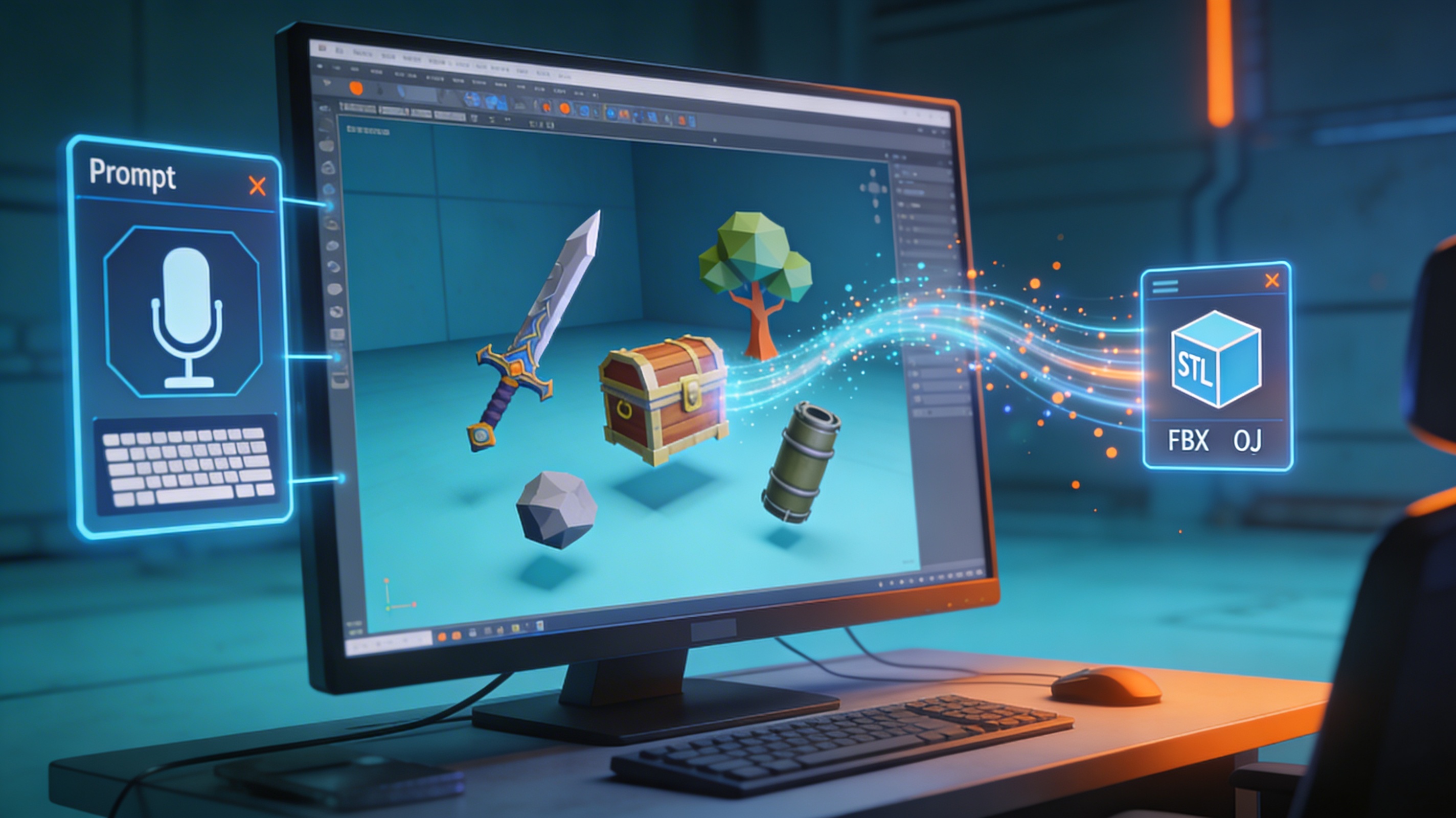
AI-Assisted Game Assets: Are They Actually Worth It in 2026?
AI asset generation went from a meme to a real tool fast. Type a prompt, get a textured 3D model in under a minute. For a solo dev staring down an empty project, that's intoxicating. So the question everyone's actually asking is simple: is the output any good, and can I ship it?
Short version: AI is a fantastic accelerator and a terrible autopilot. It'll save you real time if you know where it breaks. Let's get specific, because the hype and the doom takes are both useless.
AI does the blockout, a human makes it shippable.
What AI is genuinely great at now
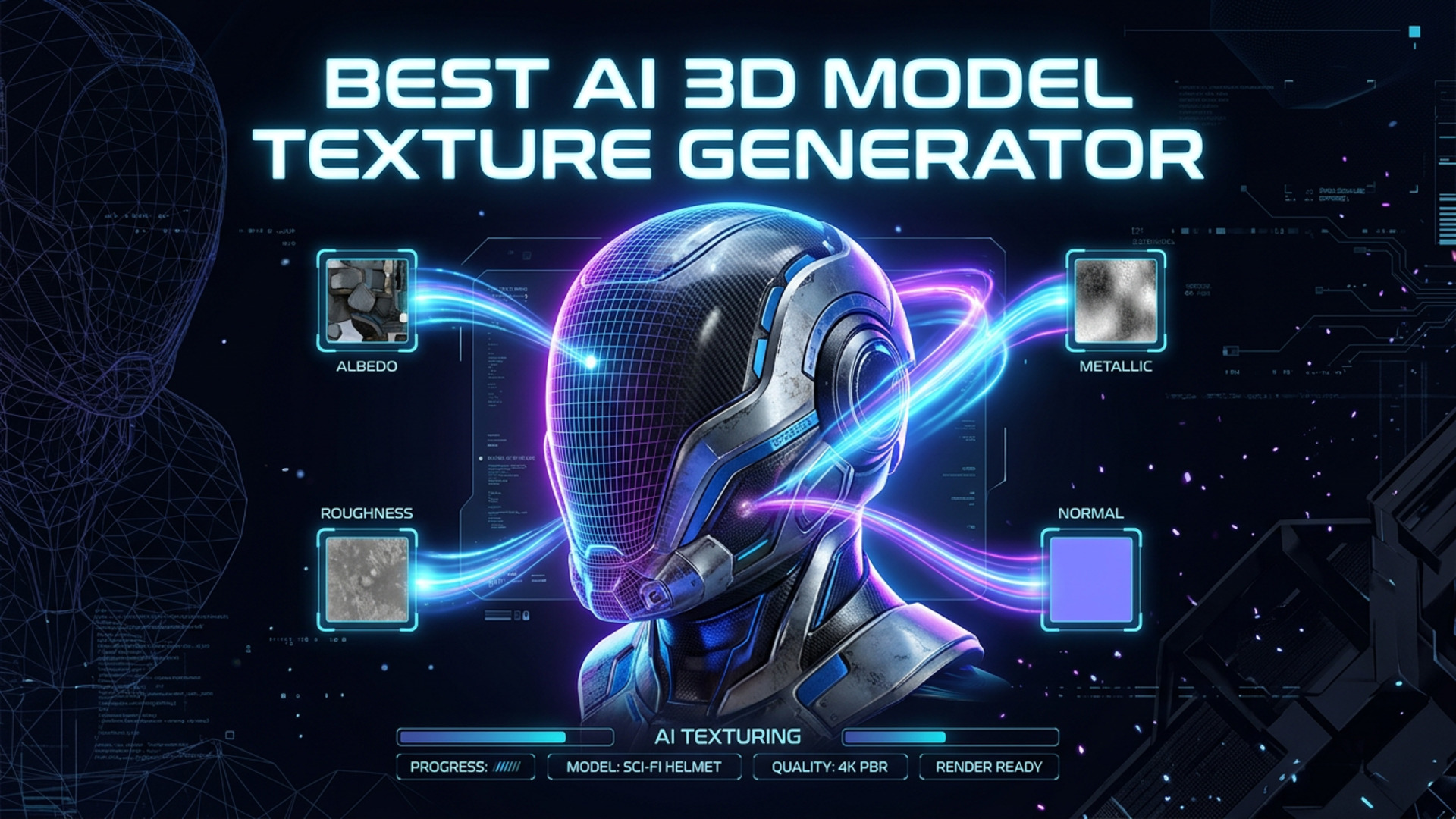
Image: via blog.neural4d.com
Give credit where it's due. 2026 AI tools are legitimately useful for some jobs:
Blockouts and concepting at warp speed. Need to see if a "ruined sci-fi shrine" reads well in your scene before committing? AI gets you a production-grade blockout in seconds. That used to be an afternoon.
Background and set-dressing props. The clutter nobody looks at closely. Crates, debris, rocks, generic furniture filling out a space. If it's not on screen for long and nobody's animating it, AI output is often good enough.
Texture and material variations. Generating tileable textures and material variants is one of the more mature, reliable uses.
Idea volume. Forty rough variations of a helmet to pick a direction from? That's a great use of the tech.
Where it falls on its face
Here's the part the demo videos skip. The single biggest problem with AI 3D output is topology.
Raw AI meshes are frequently "soup". Unstructured tangles of triangles, sometimes hundreds of thousands of them, with no clean edge flow. It can look spectacular as a still render and be completely unusable the moment you try to rig, animate, or even shade it properly. That stunning cyberpunk helmet? If it's 500K disconnected triangles underneath, it's useless for anything that moves.
The pattern in 2026 is uneven: there have been real breakthroughs in topology generation, but persistent weak spots remain in structural logic. The model doesn't "understand" that a door needs a frame or a character needs a deformable joint. So:
- Hero assets (anything the player stares at) → AI alone won't cut it. Needs a heavy human pass.
- Anything animated → needs proper retopology, clean UVs, and rigging by a human. The AI gets you 60% there; an artist makes it ship-ready.
- Modular kits → the precision and snapping requirements usually defeat raw generation.
The honest framing the good studios use: AI does the blockout, a human makes it shippable.
The copyright thing you can't ignore
This is where "worth it" gets complicated, and where a lot of devs are sleepwalking into risk.
In the US, purely AI-generated work isn't copyrightable without significant human authorship. (The Supreme Court declined to hear an appeal on this in March 2026, leaving that rule standing.) Practical translation: if you generate an asset and do nothing meaningful to it, you may not own it. Which means you can't really stop anyone else from using the same thing. Significant human modification, though, does earn copyright. Another reason that human pass matters: it's not just quality, it's ownership.
There's also disclosure creeping in. If you ship AI-generated visuals or audio into the EU, machine-readable disclosure requirements kick in on August 2, 2026. And if you're buying assets from contractors who might use AI, you want agreements covering AI-use disclosure and training-data indemnification, because "where did the training data come from" is still a live legal question.
None of this means don't use AI. It means use it with your eyes open.
So. Worth it?
Yes, with a clear-eyed split:
Use AI for: rapid blockouts, background props, texture variations, concept exploration, killing the blank-page problem.
Don't rely on AI for: hero assets, anything rigged/animated, modular building kits, or anything you need to own outright. Without a real human finishing pass.
The devs winning with AI in 2026 aren't the ones who replaced their artists. They're the ones who use AI to skip the boring 60% and spend their human hours on the 40% that actually ships.
How DevLoot handles it
We're not anti-AI, we're pro-honesty. DevLoot has an AI-assisted badge so creators can label work that used AI in the pipeline. Buyers know exactly what they're getting before checkout, and creators can ship earlier with an honest label instead of hiding it. That transparency is better for everyone: buyers who want fully hand-crafted hero assets can filter for them, and buyers who just need cheap background clutter can grab AI-assisted packs without surprises.
AI is a power tool, not a magic wand. Use it to go faster, not to skip the craft. And label it honestly. That's the whole play.
Want to know exactly how an asset was made before you buy? Look for the AI-assisted badge on DevLoot →
Related reading
Hero image: via storage.deemos.dev