How to Prep Less and Improvise More as a GM (A Low Prep Guide)
Every game master knows the Tuesday night feeling. The session is Thursday, the notebook is blank, and last time you spent six hours building a haunted mill that the party walked past without a glance. So this week you promise to prep harder, write more boxed text, stat more encounters. And the players will ignore most of that too.
Here is the uncomfortable truth that took me years of running games to accept: the amount of prep you do has almost nothing to do with how good the session is. Some of my best sessions ran off half a page of notes. Some of my worst had ten pages of material I was determined to use, and everyone at the table could feel me steering.
This is a guide to prepping less on purpose. Not lazy in the sense of not caring. Lazy in the sense of doing only the work that actually shows up at the table.
Why over-preparation quietly hurts your game
Over-prep fails for two reasons. The first is obvious: players are chaos engines. You cannot script people who have not read the script. Whatever door you polish, they will pick the other one, befriend the villain, or set the mill on fire before the ghost gets a line.
The second reason is sneakier. Heavy prep creates sunk cost. When you have three pages on the cult's ritual chamber, part of your brain starts protecting that investment. You nudge. You stall the fun idea a player just had because it points away from your material. The table notices, even if nobody says it. A GM with thin notes and open ears runs a more responsive game than a GM defending a binder.
Prep is not the session. Prep is the pile of parts you bring so the session can build itself.
The eight things actually worth writing down
The best framework I know for this comes from Mike Shea, who writes as Sly Flourish. His book Return of the Lazy Dungeon Master boils session prep down to eight short steps: review the characters, create a strong start, outline potential scenes, define secrets and clues, develop fantastic locations, outline important NPCs, choose relevant monsters, and select magic item rewards. Run through all eight and you can prep a solid session in about thirty minutes.
You do not need every step every week. But three of them deserve special attention, because they carry the most weight per minute spent.
A strong start
The first ten minutes of a session set its energy. Do not open with bookkeeping and a recap that dribbles into shopping. Open in motion: the ambush lands, the letter arrives, the floor gives way. Write one or two sentences for this and know them cold. If you prep nothing else, prep the opening.
Secrets and clues
This is the genius step. Instead of scripting scenes, write ten short secrets: facts the party might discover this session. The steward is being blackmailed. The floods started when the shrine was sealed. Crucially, you do not decide where any secret is found. When players poke somewhere unexpected, you hand them whichever secret fits the moment. It looks like you planned everything. You planned nothing except the truth.
NPCs as want plus voice
You need a name, a want, and one playable trait. "Marta, ferry keeper, wants her son back from the garrison, never finishes a sentence." That is a whole character you can run for an hour. Keep a side list of a dozen spare names, because players will always interrogate the unnamed guard, and inventing "Aldric" on the spot beats a visible pause every time.
The improv habits that carry the rest
Prepping less only works if you trust yourself to improvise, and improvisation is a habit, not a talent. A few that do the heavy lifting:
Say yes to the premise, complicate the outcome. When a player tries something unexpected, do not block it. Accept the attempt, then make the result interesting. "Yes, you can climb the crane, and the operator has now seen you." Blocking kills momentum. Complication creates story.
Steal from your players. They speculate constantly. "What if the mayor is the smuggler?" If their theory is better than your plan, quietly make it true. They feel brilliant, you get a plot twist you did not have to invent, and the mystery still surprises them because they never believe they guessed it.
Ask instead of invent. "You have met this dwarf before. Where, and what do you owe him?" Players fill gaps with material they are already invested in. This is free prep, generated live, by the people it needs to matter to.
Let the dice finish the sentence. If you do not know whether the rope holds or the guard talks, call for a roll and commit to the result. Rulings over rules keeps the game moving, and you can look up the exact rule after the session.
If you are brand new to the chair, our guide to running your first TTRPG session as a GM pairs well with all of this. Low prep is easier when you have one session behind you and know what your table actually uses.
Good GM guides are prep multipliers
One more honest observation: the right GM book replaces hours of homebrew scaffolding. A guide written for your specific system hands you structure, so your thirty minutes goes into your table's story instead of reinventing procedure.
A nice example from our own catalog: the Faith line by Rutz Studios, a Christian tabletop RPG we covered when we looked at faith-based tabletop RPGs. Its GM guide, Faith: The Shepherd's Companion ($4.99), is built exactly like a low prep tool. It gives the Shepherd (that is Faith's word for GM) ready-made structure for campaigns and Trials, plus guidance on running the Faith Die, so you show up with a frame instead of a script. If the game's themes fit your table, it is a tidy case study in how a slim GM book can do the prep for you. The Faith Core Rulebook ($19.99) is the entry point if the setting is new to you.
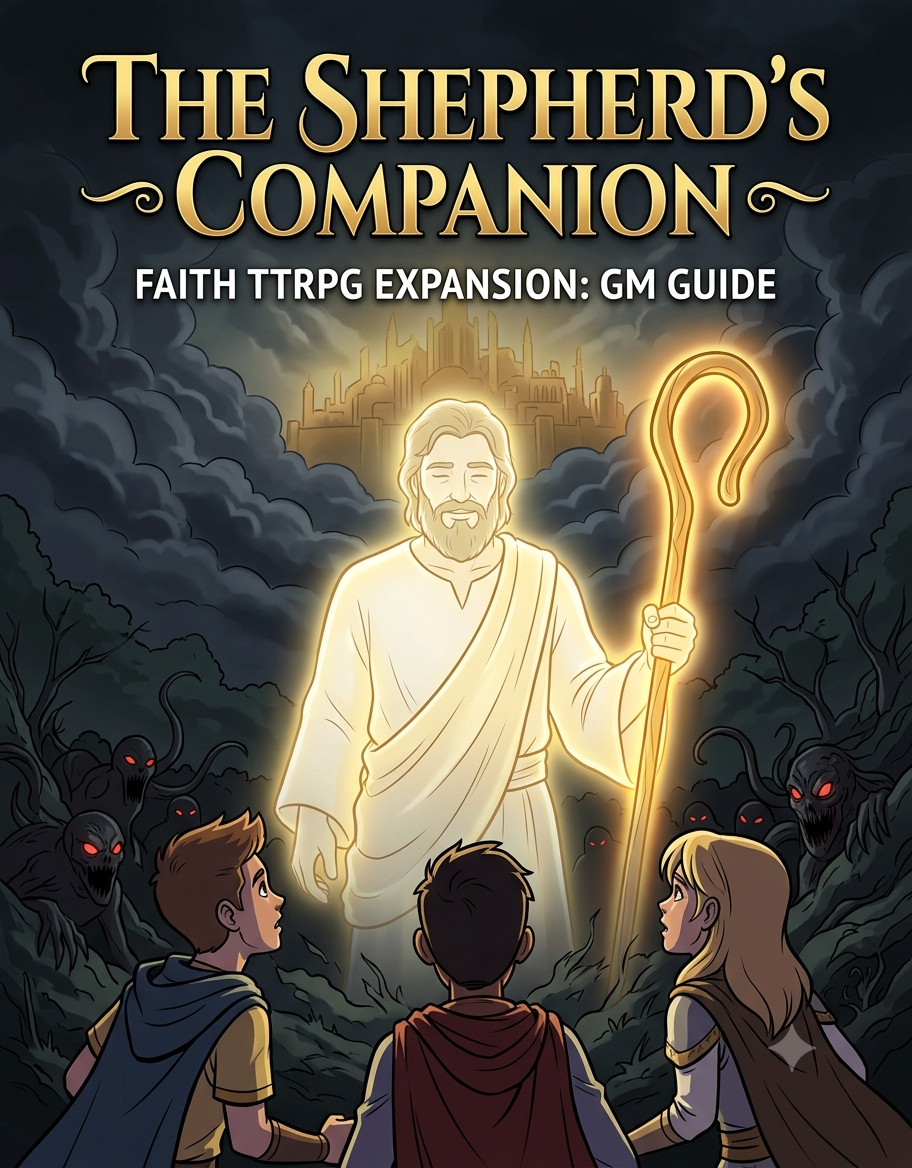
Faith: The Shepherd's Companion, the Shepherd's guide for the Faith TTRPG by Rutz Studios.
A thirty-minute prep routine to steal
Here is the whole routine, timed. Five minutes: reread your notes from last session and skim the character sheets for hooks. Five minutes: write the strong start. Ten minutes: list ten secrets. Five minutes: jot three flexible locations with one evocative detail each. Five minutes: name your NPCs and monsters, note treasure if it fits. Close the notebook. You are done.
It will feel undercooked the first time. Run the session anyway. What you will find is that the gaps you left get filled by the best content source at the table: your players, reacting to a GM who is actually listening instead of flipping pages.
Your next step is simple. For your next session, cap prep at thirty minutes, write your ten secrets, and open strong. If you want more structure under you, browse the DevLoot blog for our other TTRPG guides, or grab a system whose GM book does the scaffolding for you.
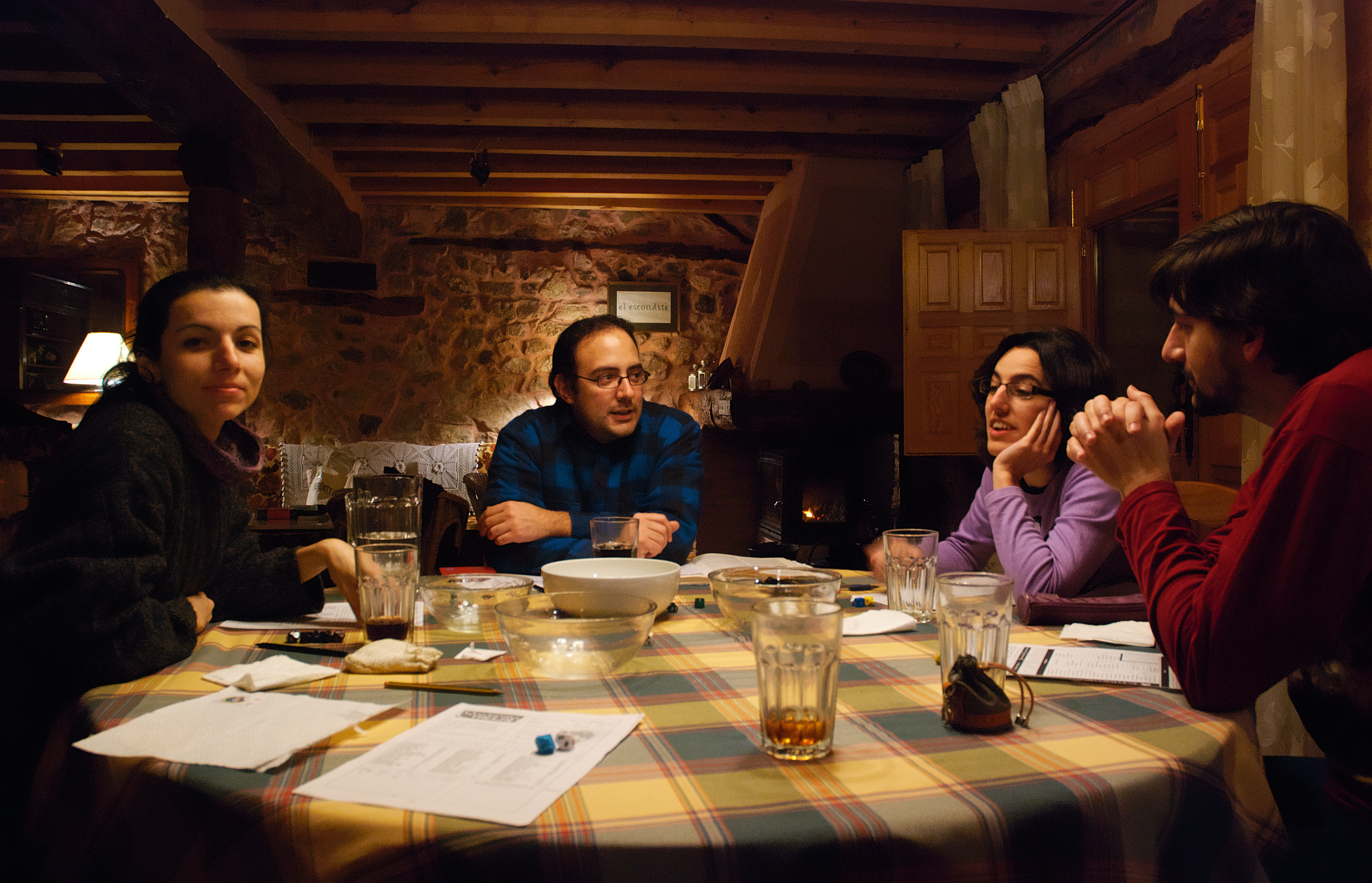
Hero photo: Diacritica, Wikimedia Commons, CC BY-SA 3.0.
