Store Branding for Game Asset Sellers: How to Build a Store Buyers Recognize on Sight
Pull up your store page and squint at it. Not one listing, the whole grid at once. Does it look like one person with a plan made all of that? Or does it look like a garage sale, a pixel dungeon pack sitting next to photoreal scanned rocks, next to a stylized tree set you made during a jam in 2023?
I did this exercise about two years into selling and it stung. My store looked like five different artists sharing one account. Sales were okay, but every sale was a cold start. Nobody bought a second pack. Nobody remembered my store name a week later. I was competing on search ranking and price for every unit I moved, forever, because the only thing my listings had in common was my payout email.
Here's the uncomfortable truth about this market: individual assets are interchangeable. There are two hundred rock packs. Stores are not interchangeable. Store branding, an identity buyers recognize on sight, is the only real moat a solo seller has. And most of us never build one.
The Synty test
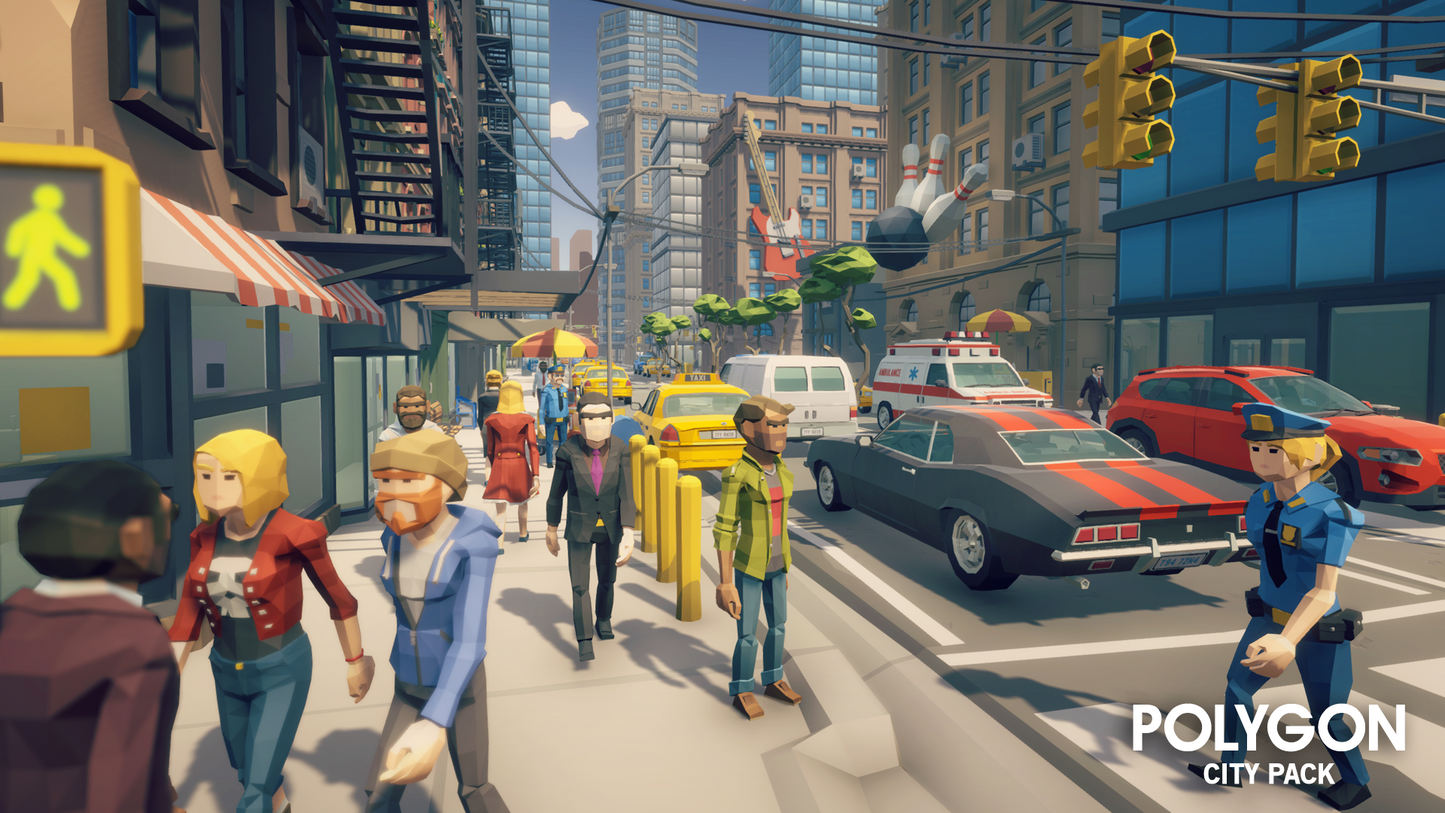
You already know what strong store branding looks like, even if you never called it that. Synty sells low poly packs. Faceted shapes, flat colors, chunky silhouettes, that slightly toy-like lighting. You can identify a Synty pack from a single cropped screenshot with no logo in frame. That recognition does quiet work every single day. A dev who bought the City pack and shipped with it will grab the Town pack without reading a word of the description, because the style is the guarantee. Poly budgets are predictable, everything snaps together, the materials behave the same way in whatever pipeline you're on.

One glance and you know exactly whose store this is. Image: Synty Studios, POLYGON City Pack
Kenney pulled off the same trick in 2D, with free public domain sprites of all things. Flat colors, rounded corners, friendly shapes. Tens of thousands of assets and you could pick any one of them out of a police lineup.
Now notice what's absent from both examples. Neither is the most technically impressive artist in their category. Not close, and I say that with love. The brand isn't "best art". The brand is "I know exactly what I'm getting". Consistency beats raw quality here, which is a weird sentence to type, but I've watched it be true for a decade.
Buyers don't remember assets. They remember stores. And they only remember stores that look like one thing.
The practice: make everything look like it came from one shop
If you fix a single thing about your store this year, make it this. Consistency across five surfaces, in rough order of impact.
1. Pick a lane on art style
This is the hard one because it means saying no to work you're capable of doing. Your lane can be broad, but it has to be nameable in one sentence. "Hand painted dungeon assets." "Clean modular sci-fi kits." "Mobile-ready stylized nature." If you can't describe your store in a sentence, buyers can't either, and what they can't describe they can't remember or recommend in a Discord when someone asks "who makes good X".
2. Reuse one render setup
Build a single presentation scene: same HDRI, same camera angles, same backdrop, same post settings. Save it as a template project. Takes an evening. From then on, renders of pack twelve match renders of pack one, and your whole catalog reads as a set even when the content varies. This is the cheapest branding money can't buy, it's literally a saved scene file.
3. Template your thumbnails
One layout: hero asset large, pack name in the same font in the same corner, same accent color. Your thumbnail is doing most of your selling anyway (I wrote up the details in how to make thumbnails that actually sell). When a buyer sees three of your packs in a search grid and they visibly belong together, that's a brick wall of your brand sitting in the middle of everyone else's noise.
4. Name packs like a series
Synty didn't call their packs "City Asset Megapack" and "Ultimate Town Bundle 2024". It's POLYGON City, POLYGON Town, POLYGON Farm. A shared prefix or naming pattern signals there's more where that came from, and it quietly turns buyers into collectors. "Medieval Village Vol. 2" tells someone Vol. 1 exists. That's a sale you didn't have to run an ad for.
5. Keep one voice in your copy
Descriptions, changelogs, support replies. Same register everywhere. If your listings are dry spec sheets but your changelog cracks jokes, pick one. Buyers notice tone drift the same way they notice style drift, they just can't articulate it. It reads as "multiple people, no plan".
What about the old packs that don't fit
Don't nuke revenue in a fit of rebranding enthusiasm. Minimum effort: re-render the old thumbnails with your new template so the grid stops looking chaotic. Medium effort: fold the strays into a legacy bundle at a discount. Zero effort: leave them up and let them sink down the store page naturally. The store you're building forward matters more than the archive.
When it starts to pay
Not on pack one, and I want to be honest about that. Branding pays on packs two and three in the same lane, when cross-sales start showing up without any promo push. The buyer who liked your first dungeon set buys the second one on release day. Reviews start saying "another solid pack from this store", and that phrase is the whole win condition. It compounds from there (more on that in turning one buyer into ten sales). My repeat purchase rate roughly tripled in the year after I cleaned up my store identity, and I changed nothing about the assets themselves.
Give the brand an actual home
Here's the catch with doing all this on a big marketplace: your beautifully consistent listings still render inside someone else's template. Their logo up top, their fonts, your packs interleaved with your competitors'. You're a well-dressed row in somebody else's catalog.
That's the main reason I tell sellers to look at DevLoot. You get a custom storefront, your banner, your branding, your whole catalog on one page you can link from anywhere, plus verified badges so buyers know the store is legit. The economics are friendly too: 12% on the Free plan, 8% on Pro, so you keep up to 92% of every sale. And payouts run through Stripe Direct Charges, meaning the money lands in your own Stripe account fast instead of sitting in a marketplace escrow for a month or two.
If you've been meaning to take your store seriously, setting up a vendor account takes a few minutes. Bring the brand rules with you: one style, one render rig, one thumbnail template, one naming scheme, one voice.
The garage sale version of your store is costing you the second sale every single day. Squint at the grid, then go fix it.