How to Create Memorable NPCs: A GM's Guide to Characters Players Remember
Your players will forget the name of the dungeon. They will forget the exact loot table and which round the ogre went down. What they will remember, sometimes for years, is the nervous ferryman who kept counting coins, or the innkeeper who refused to serve elves until one of them fixed her roof. NPCs are where a campaign gets its texture. So why do so many of ours come out as quest-dispensing furniture?
Usually it is not a creativity problem. It is a time problem. You have twelve townsfolk to prep, a session on Friday, and a job. The good news is that memorable NPCs do not need backstories. They need about three details you can actually perform at the table. Here is how I build them, plus the tricks I have stolen from GMs smarter than me.
Why most NPCs fall flat
A flat NPC exists only because the plot needs them. They appear, deliver information, and vanish. Players can smell this. The moment they think "this person is here because the GM wants us to go to the mines," the NPC stops being a person and becomes a signpost.
Justin Alexander makes this point in his Random GM Tip on memorable NPCs: the less players feel that a character exists to push them toward something, the more they treat that character as real. The fix is not more lore. It is giving each NPC a life that keeps going whether or not the party shows up.
The three-detail NPC
For any NPC who might speak more than one line, I write three things on an index card. That is it. If I can't fit it on a card, I won't remember it mid-session anyway.
1. Something you can do with your body or voice
A mannerism you can physically perform is worth more than a paragraph of description. Tapping the table twice before answering. Talking very slowly. Squinting at everyone like they owe money. Alexander recommends this exact approach because it helps you slip in and out of a character fast, and it gives players a hook to recognize them next time. You do not need to be a voice actor. A posture change works fine.
2. Something they want right now
Not a life goal. A want. The blacksmith wants to close up early because her daughter is sick. The guard wants a bribe but is terrified of his captain. A want gives you instant dialogue, because every conversation becomes the NPC steering toward it. Bonus points if the want only partly overlaps with what the players need, so there is something to negotiate.
3. A name that doesn't sound like the last one
Mike Shea of Sly Flourish, in his post on building NPCs with a "method" approach, passes along a tip from Stephen King's On Writing: give your characters different starting letters. Four NPCs called Alaver, Arathin, Avondel, and Asyer blur together instantly. Shea also suggests keeping a list of about a hundred names on hand, which I can confirm saves real panic when a player asks the stable boy what he's called.
Players don't remember backstory. They remember the ferryman who kept counting his coins.
Borrow a performance
Another trick from that Sly Flourish article: pick an actor or a character from a show or book and quietly base your NPC on them. "Grumpy detective from that one crime drama" gives you a voice, a rhythm, and opinions in four words. The further the source is from fantasy, the less likely your table spots it. I have run an entire merchant guild as a cast of sitcom characters and nobody noticed for months.
This is especially useful if you freeze up when improvising. You are not inventing a person from scratch, you are asking "what would that character say here?" That question is much easier to answer at 10 pm with five people staring at you.
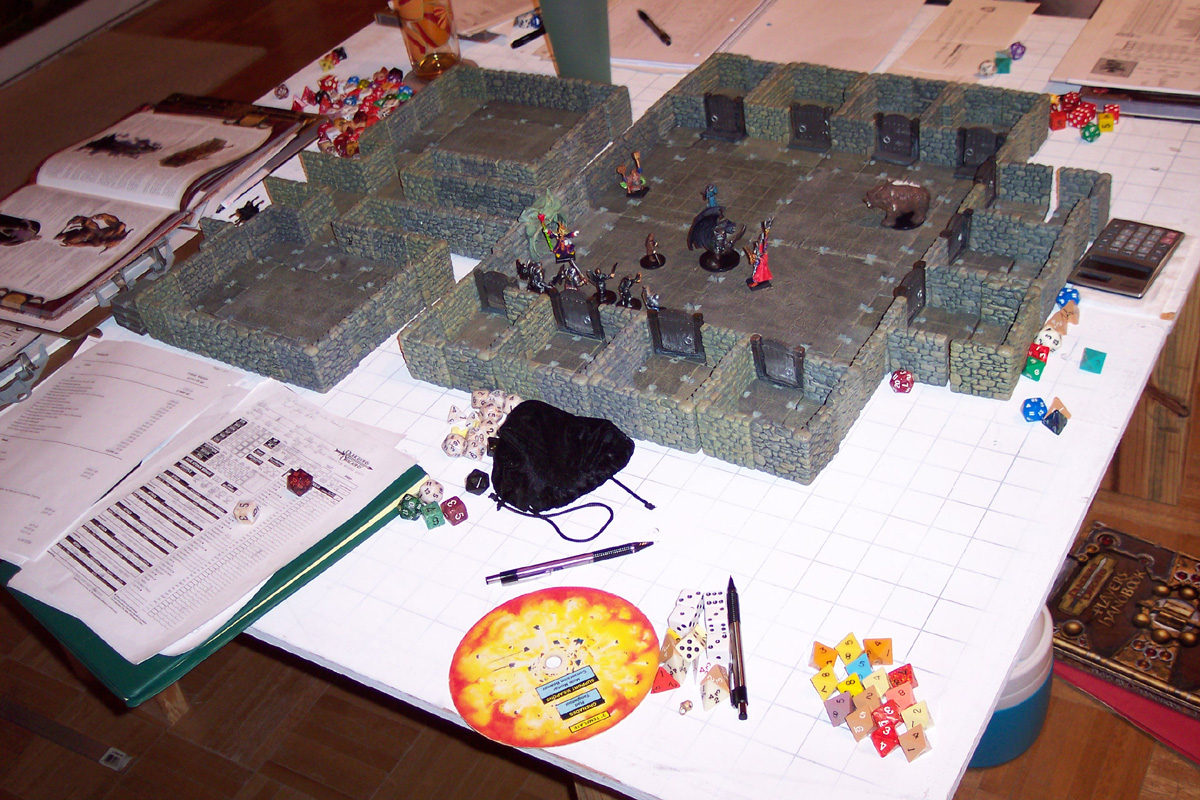
A mid-session table, full of NPCs waiting to be met. Photo: Philip Mitchell, Wikimedia Commons, CC BY-SA.

Make a lot of NPCs, then keep the ones that click
This is the single most useful mindset shift I've made as a GM. You cannot predict which NPC your players will love. I once spent an evening writing a scheming noble with a secret twin. The party ignored her. They adopted a goat herder I made up on the spot because he was rude to the paladin.
So throw out lots of small, cheap NPCs. Watch who the players ask about, joke about, or go back to visit. Then invest in those. Give that goat herder a problem next session. Let him show up somewhere unexpected. Alexander describes the same approach: let the NPCs that aren't clicking move on with their lives, and focus energy on the ones that do.
A related idea is the "Law of Conservation of NPCs," which Alexander credits to Neel Krishnaswami: when you need a new character, check whether an existing one could fill the role first. If the party needs a smuggler, maybe the rude goat herder has a cousin. Every time you reuse a familiar face, the world feels smaller and more connected, in a good way.
If this sounds like it pairs well with low-prep GMing, it does. I wrote more about that style in Prep Less, Improvise More.
Give them a life off-screen
Recurring NPCs feel alive when things happen to them between sessions. You don't need a full simulation. Before each game, pick two or three NPCs the players care about and ask: what changed for them since last time? The baker got engaged. The guard captain got demoted. The rival adventurer is now wearing a cloak the party definitely recognizes.
Then let players stumble onto it rather than announcing it. The moment a player says "wait, why is Brannoc wearing our cloak?" is the moment the world feels real.
Quick NPC checklist for your next session
- Name with a starting letter you haven't used much lately.
- One physical or vocal tic you can perform without thinking.
- One current want, ideally slightly at odds with the party.
- One opinion about something in the world (a faction, the weather, the king).
- One thing they know that the players might need.
Five lines. That covers almost every NPC you will ever need, from shopkeeper to cult leader. Keep a stack of blank cards behind your screen and fill them in as characters appear, so the stable boy you invented in session two is still named Pell in session twelve.
If you are still finding your footing behind the screen, our guide on running your first TTRPG session as a GM covers the basics around this.
NPCs that carry a game's themes
NPCs are also the best tool you have for showing what a setting is about. In a horror game, the townsfolk who won't make eye contact do more work than any boxed text. In a hopeful or faith-themed game, an NPC who needs mercy, or who offers it when the party least expects it, can land a theme without anyone giving a speech.
That's one reason I like how some systems build NPC roles right into the GM guidance. The Faith tabletop RPG from Rutz Studios, a Christian TTRPG where players "play by faith, not by sight," calls its GM the Shepherd, and gives that role a dedicated book.
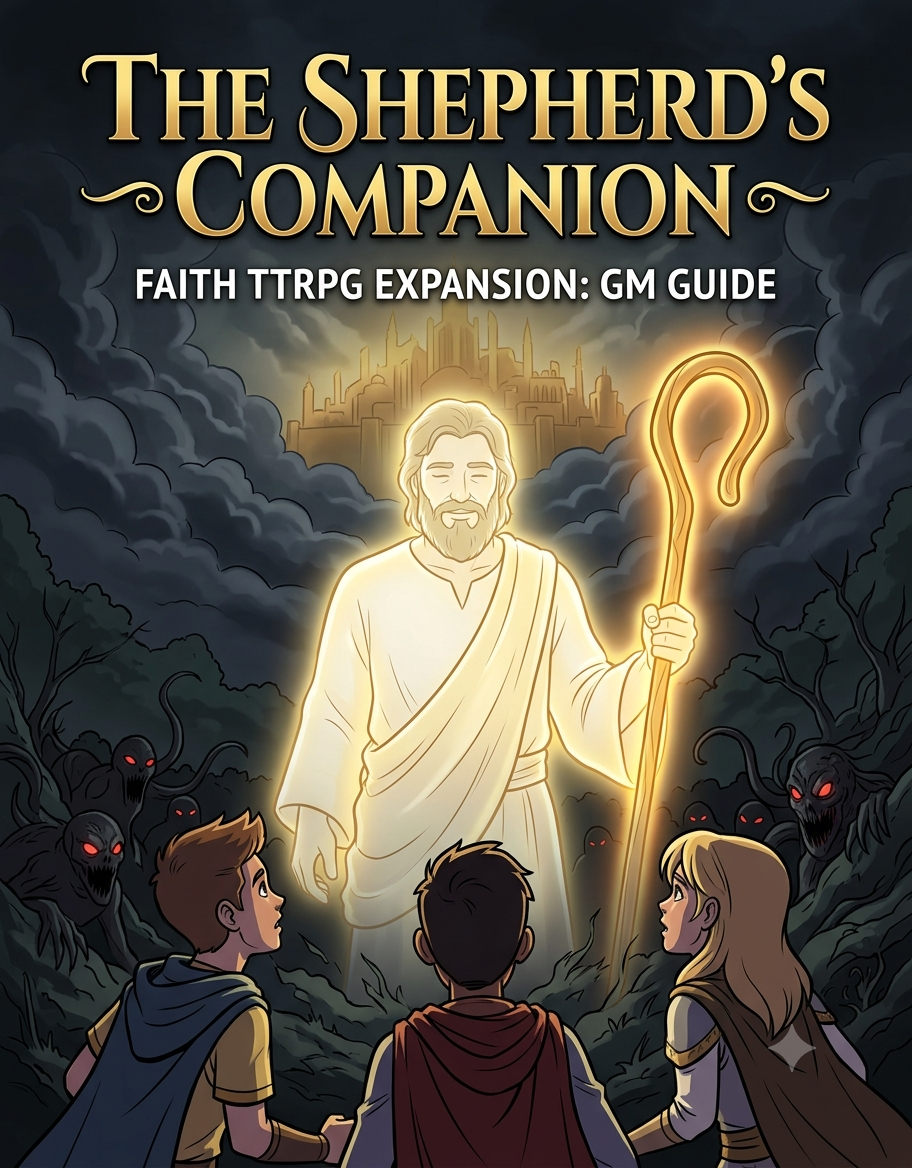
Cover of Faith: The Shepherd's Companion by Rutz Studios, on DevLoot.
The Shepherd's Companion ($4.99) is the GM guide for that system, covering how to run campaigns, craft Trials, manage the Faith Die, and build the world your players move through. If you run Faith, or you're curious how a values-driven game frames the GM's job, it's an inexpensive look at that side of the screen. You'll need the Faith Core Rulebook to actually play. If Faith isn't your table's style, everything in this post works just as well in any other system.
Your next step
Before your next session, grab five index cards and write five NPCs using the checklist above. Don't write backstory. Then run the session and pay attention to which one your players latch onto. That one is your new recurring character. The other four can go back in the deck, ready to be someone else's cousin when you need them.
And if you're looking for new tabletop material to run, browse the TTRPG section on DevLoot.