Modular Character Packs for Unity: Fixing NPC Crowds That Look Like Clones
The moment your sci-fi crowd stops being believable
You have a market district on a terraformed colony. Neon signs, a couple of hover vendors, ambient chatter. It reads great in the blockout. Then you drop in your NPC prefab, duplicate it forty times to fill the street, hit play, and the whole thing dies instantly. Forty identical aliens standing around. Same head, same jacket, same boots. The player clocks it in about two seconds and the colony stops feeling like a place where people live.
Every dev who has built a populated scene has hit this wall. It is not a lighting problem or a shader problem. It is a variety problem, and variety is expensive. One NPC is a weekend. Twenty distinct NPCs is a month you do not have, especially if you are also writing the dialogue system, the save system, and the thing that actually makes your game a game.
Why building unique NPCs the hard way never gets finished
The usual plan is to make a base character and then produce alternates. It sounds manageable until you actually do it. Each new character means new geometry, new UVs, a new texture set, a fresh skinning pass, and another prefab to maintain. Change the rig once and you are back in every one of them.
Then you get the second problem, which is worse: your alternates drift. NPC three has slightly heavier proportions than NPC one because you modeled it two weeks later and your eye moved. NPC seven has a different emissive intensity. Put them in a crowd and the scene does not look varied, it looks inconsistent. That is the thing nobody warns you about. Unstyled variety is not better than sameness, it is just noisier.
The real cost is the pipeline, not the modeling
Modeling a stylized low poly character is the fun part. The expensive part is everything downstream. Export settings, scale sanity, import rig type, avatar mapping, materials that survive the trip into your project. If you are unsure how much of that overhead is avoidable, our breakdown of Unity character rigging and skinning with Humanoid versus Generic rigs covers what actually matters and what you can stop worrying about. Multiply that checklist by twenty characters and you can see why most solo projects quietly ship with three NPCs and hope nobody notices.
The modular fix: three slots instead of a hundred characters
The approach that works at small scale is not more characters. It is fewer characters with more swappable parts. Split every outfit into Head, Upper Body and Lower Body, build all three on the same base proportions, and let the combinations do the work.
The math gets absurd fast. Twenty sets across three slots gives you 20 x 20 x 20 potential pairings. You are not going to use eight thousand NPCs, obviously, but that is the point. You are never short. You can hand your crowd spawner three random indices and get a street full of people who all clearly come from the same world without any two of them being twins.
Variety in a crowd is not about how many characters you modeled. It is about how many distinct silhouettes the player reads in three seconds of looking.
What the Modular Martians pack actually gives you
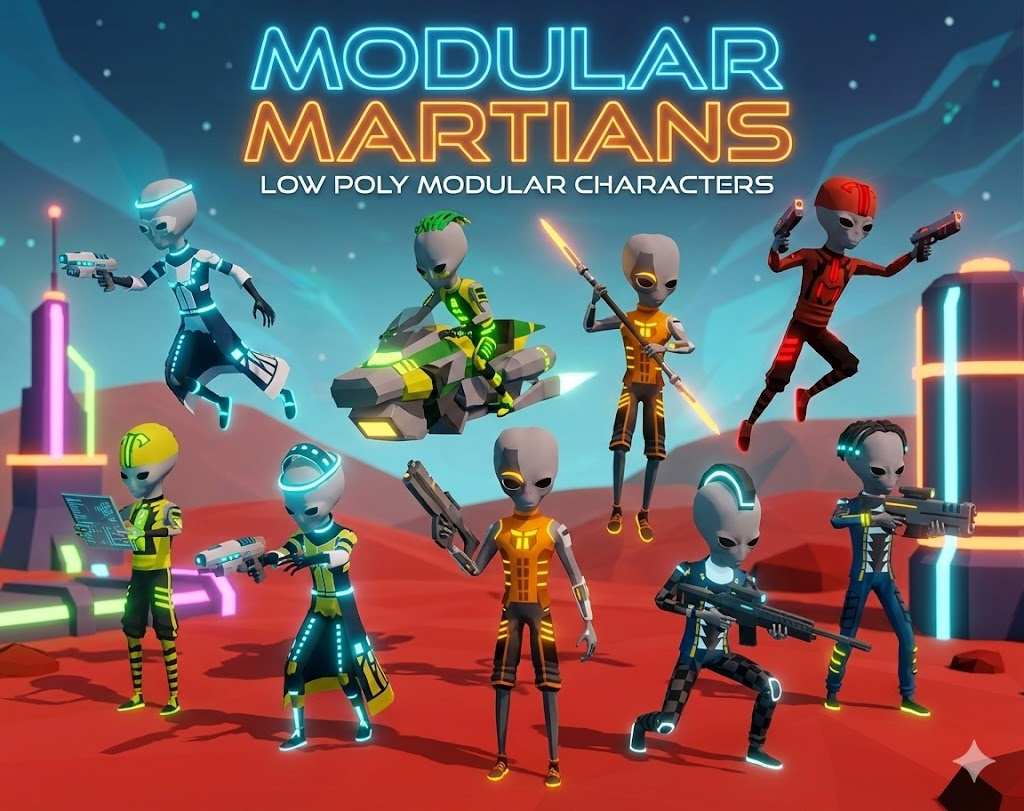
This is exactly what the Modular Martians mix and match outfit pack for Unity is built around. Twenty complete stylized sci-fi outfit sets, every one split into the same three swappable parts, all sitting on consistent Martian base proportions so nothing looks bolted on when you remix.
The art direction leans low poly with neon and emissive detailing, which is a practical choice more than a stylistic one. Glow strips give each outfit a readable accent color at distance, so a player scanning a crowd can tell a security uniform from a lab coat from a street punk without needing to walk up to anyone. That readability is what makes NPC variety actually register in gameplay rather than only in your asset browser.
The style range is wider than most character packs
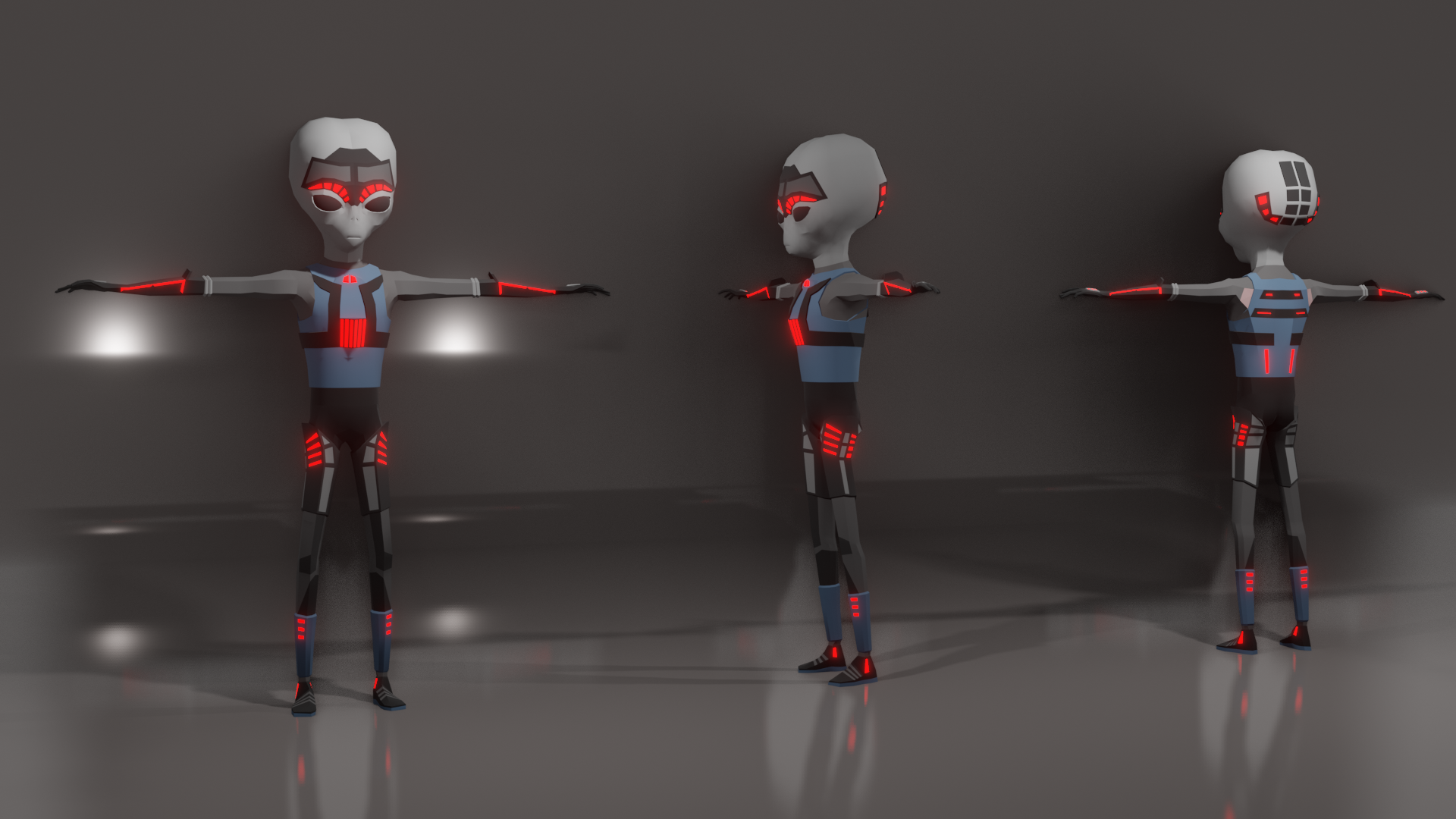
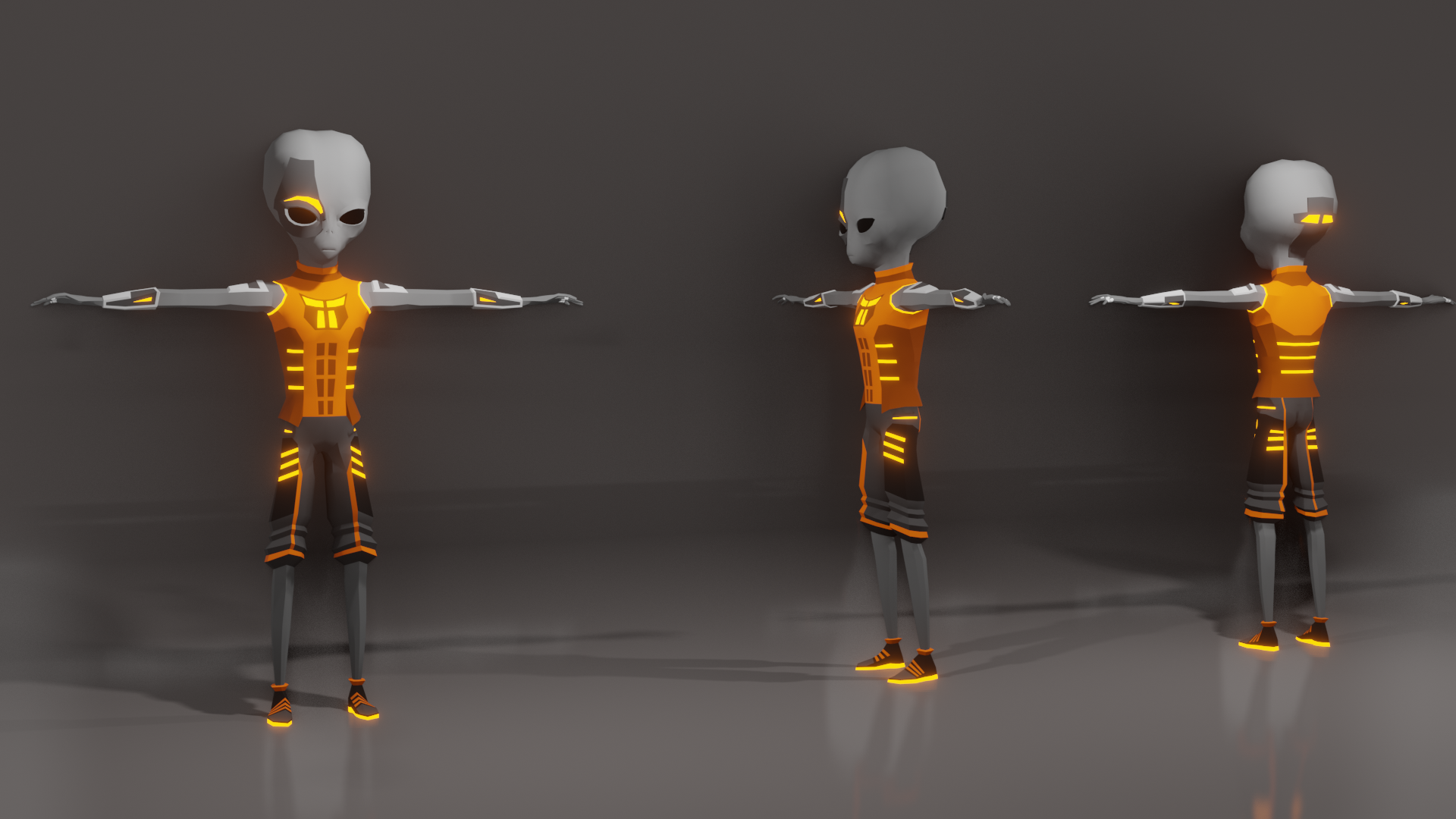
You are not getting twenty recolors. The themes cover genuinely different silhouettes and social roles: clean white tactical troopers, dark metal armor with aggressive red glow, sporty street looks with warm neon, sleek cyber outfits with cyan trim, punk energy with green accents, a lab coat scientist read, cold futuristic formalwear, a hazard red brawler, a ceremonial gold robe, and a blue security uniform. That spread is enough to populate factions, not just bodies.
If you are building a game with troopers, rebels, scientists and elites, you already have your visual language sitting in the pack. Assign a color family to a faction, pull three or four set combinations per faction, and your world reads as organized without you writing a single design document about it.
Who this is actually for
Solo devs and small teams building sci-fi projects who need a populated world and do not have a character artist on the team. If your game has a hub area, a station, a colony, a market, a bar, or any space where NPCs stand around and make the place feel inhabited, this solves that in an afternoon instead of a quarter.
It also fits anyone building a character creator or cosmetic system. Modular parts are already the correct data shape for that: three dropdowns, three mesh swaps, done. Loot style cosmetic drops work the same way. You do not have to design a system around the assets because the assets already assume the system.
Crowd generation is the third obvious use. Spawn a hundred, randomize the three slots, and you have a believable population. Worth pairing with sensible performance habits though. Low poly helps, but a hundred skinned meshes still costs you, and our notes on keeping Unity crowd performance under control with lightweight characters are the right companion read before you go wild with spawn counts.
How to work it into a scene
The simplest setup is a prefab with three empty child transforms named Head, Upper and Lower, and a tiny script holding three arrays of mesh references. On spawn, pick a random index for each and assign. Twelve lines of code. If you want faction control instead of pure randomness, swap the random pick for a weighted table per faction and you get crowds that feel intentional rather than shuffled.
For hero characters, skip the randomizer and hand pick a combination you like. Lock it into its own prefab, give it a slightly different emissive color, and it will read as a named character while still belonging to the same world as the background crowd. That consistency is the whole advantage of pulling everyone from one modular base.
Is it worth picking up?
At 4.99 USD for twenty modular sets, the honest comparison is not against other asset packs. It is against your own time. One evening of modeling a single character costs you more than this pack, and at the end of that evening you have one character instead of a combinatorial system you can pull from for the rest of the project.
The caveat to be clear about: this is an art pack, not a character framework. You are getting meshes and modular parts, not a controller, an animation set, or a crowd system. You bring the rig workflow and the spawn logic. If you wanted a complete NPC solution in a box, this is not that, and the price reflects it honestly.
But if your problem is that your sci-fi world is empty, or worse, full of clones, this is the fastest path out of it. Take a look at the Modular Martians modular sci-fi character pack on DevLoot, grab it, and go fill your colony with people who actually look like they came from different lives.